Hospital
-
Anesthesia Assistance in Outpatient Colonoscopy and Risk of Aspiration Pneumonia, Bowl Perforation, and Splenic Injury
BACKGROUND & AIMS:The increase in use of anesthesia assistance (AA) to achieve deep sedation with propofol during colonoscopy has significantly increased colonoscopy costs without evidence for increased quality and with…
-
Comparing Population-based Risk-stratification Model Performance Using Demographic, Diagnosis and Medication Data Extracted From Outpatient Electronic Health Records Versus Administrative Claims.
Department of Health Policy and Management, Johns Hopkins School of Public Health, Center for Population Health Information Technology, Baltimore, MD HealthPartners, Health Informatics Division, Bloomington, MN. BACKGROUND: There is an increasing…
-
A cohort study examining emergency department visits and hospital admissions among people who use drugs in Ottawa,Canada
Background: The health of people who use drugs (PWUD) is characterized by multimorbidity and chronicity of health conditions, necessitating an understanding of their healthcare utilization. The objective of this study…
-
Association of the Hospital Volume of Frail Surgical Patients Cared for with Outcomes after Elective, Major Noncardiac Surgery
Background: Frailty is a risk factor for adverse postoperative outcomes. Hospitals that perform higher volumes of surgery have better outcomes than low-volume providers. We hypothesized that frail patients undergoing elective…
-
Exploring the Johns Hopkins Aggregated Diagnosis Groups in administrative data as a measure of child health
This study explored the utility of the Johns Hopkins Aggregated Diagnostic Groups (ADGs) as a noncategorical measure of child health in administrative health data. Canadian administrative health records for the…
-
Case Study: Johns Hopkins Community Health Partnership: A model for transformation
Abstract To address the challenging healthcare needs of the population served by an urban academic medical center, we developed the Johns Hopkins Community Health Partnership (J-CHiP), a novel care coordination…
-
A Population-Based Study of Care at the End of Life Among People With HIV in Ontario From 2010 to 2013
Background: Aging and increasing comorbidity is changing the end-of-life experience of people living with HIV (PLHIV) in the developed world. We quantified, at a population level, the receipt of healthcare…
-
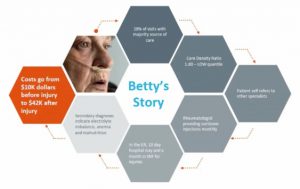
Leveraging Care Density: A New Way to Measure and Enhance Care Coordination
If optimizing quality of care, clinical outcomes and cost effectiveness is one of your priorities, ensuring your patient population receives comprehensive, coordinated care from their physicians is a good first…
-
Genetics Consultation Rates Following a Diagnosis of High-Grade Serous Ovarian Carcinoma in the Canadian Province of Ontario
Objective: In 2001, the province of Ontario expanded cancer genetic testing eligibility to include all women with high-grade serous ovarian carcinoma (HGSC) of the ovary, fallopian tube, and peritoneum. The…
-
Does increased medication use among seniors increase risk of hospitalization and emergency department visits?
Working Paper 150004. Toronto, ON, Canada: Canadian Centre for Health Economics. Canadian Centre for Health Economics, Toronto, ON, Canada Objective: to examine the extent of the health risks of consuming…
-
Outcomes of patients with chronic obstructive pulmonary disease diagnosed with or without pulmonary function testing
Background: A small number of people with chronic obstructive pulmonary disease (COPD) receive pulmonary function testing around the time of diagnosis. Because omitting testing increases misdiagnosis, we sought to determine…
-
The uptake of active surveillance for the management of prostate cancer: A population-based analysis
Introduction: Active surveillance (AS) is a strategy for the management of low-risk prostate cancer (PCa). However, few studies have assessed the uptake of AS at a population level and none…