United States
-
Assessing the Population-Level Correlation of Medication Regimen Complexity and Adherence Indices Using Electronic Health Records and Insurance Claims
Abstract BACKGROUND Nonadherence to medication regimens can lead to adverse healthcare outcomes and increasing costs. OBJECTIVES To (a) assess the level of medication complexity at an outpatient setting using population-level…
-

Population Segmentation Case Study – Payer
Johns Hopkins HealthCare (JHHC) develops and manages medical care contracts for close to 400,000 plan members. JHHC created a framework based on an adapted version of the National Academy of…
-
Analysis of modifiable and nonmodifiable risk factors in patients undergoing pituitary surgery
Abstract OBJECTIVE Pituitary adenomas (PAs) are among the most common intracranial tumors. Understanding the clinical effects of various modifiable risk factors (MRFs) and nonmodifiable risk factors (NMRFs) is important in…
-
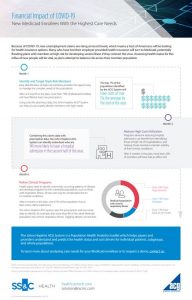
New Medicaid Enrollees with Highest Care Needs
The ACG System can help identify new Medicaid enrollees with high care needs.
-
Objective Estimates of Direct-Medical Costs Among Persons Aged 3 to 38 Years With and Without Research-Defined Autism Spectrum Disorder Ascertained During Childhood: A Population-Based Birth-Cohort Study
Abstract Objectives Accurate estimates of autism spectrum disorder (ASD)–associated medical costs are essential for predicting future care needs, allocating resources, identifying best practices, and modeling cost-effectiveness. Most existing studies have…
-
In-Hospital Outcomes of Patients on Maintenance Dialysis With Frailty: 10-year Results From the US National Inpatient Sample Database
Abstract Objective The in-hospital mortality rate of patients with end-stage renal disease (ESRD) is 6-8 times greater than that of the general population. A large fraction of patients with ESRD…
-
Temporal condition pattern mining in large, sparse electronic health record data: A case study in characterizing pediatric asthma
Abstract Objective This study introduces a temporal condition pattern mining methodology to address the sparse nature of coded condition concept utilization in electronic health record data. As a validation study,…
-
Preoperative frailty predicts adverse short‐term postoperative outcomes in patients treated with radical nephroureterectomy
Abstract Background To investigate the effect of frailty on short‐term postoperative outcomes and total hospital charges (THCs) in patients with non‐metastatic upper urinary tract carcinoma, treated with radical nephroureterectomy (RNU).…
-
A systematic review of case-mix models for home healthcare payment: Making sense of variation
Abstract Background Case-mix based payment of healthcare services offers potential to contain expenditure growth and simultaneously support needs-based care provision. However, limited evidence exists on its application in home healthcare…
-
Emergency department use among young adult Medicare beneficiaries with autism and intellectual disabilities
Abstract Background Individuals on the autism spectrum are at greater risk for a variety of co-occurring psychiatric and medical conditions, which could result in greater emergency department (ED) use. We…
-
Impact of comprehensive care on healthcare use among a cohort of marginalized people living with hepatitis C in Toronto, Canada
Abstract Background The majority of new hepatitis C (HCV) cases occur among people who inject drugs. In recent years, multidisciplinary models of HCV treatment have emerged that demonstrate successful treatment…
-
Patient frailty predicts worse perioperative outcomes and higher cost after radical cystectomy
Abstract Background Relatively few studies investigated the importance of frailty in radical cystectomy (RC) patients. We tested the ability of frailty, using the Johns Hopkins Adjusted Clinical Groups indicator, to…