Hadi Kharrazi
-
Assessing the Value of Unsupervised Clustering in Predicting Persistent High Healthcare Utilizers: Retrospective Analysis of Insurance Claims Data
Abstract Background A high proportion of healthcare services are persistently utilized by a small subpopulation of patients. To improve clinical outcomes while reducing costs and utilization, population health management programs…
-
Development of measurable criteria to identify and prioritize patients for inclusion in comprehensive medication management programs within primary care settings
ABSTRACT BACKGROUND Pharmacists optimize medication use and ensure the safe and effective delivery of pharmacotherapy to patients using comprehensive medication management (CMM). Identifying and prioritizing individual patients who will most…
-
Comparing the Predictive Effects of Patient Medication Adherence Indices in Electronic Health Record and Claims-Based Risk Stratification Models
Abstract Multiple indices are available to measure medication adherence behaviors. Medication adherence measures, however, have rarely been extracted from electronic health records (EHRs) for population-level risk predictions. This study assessed…
-
Assessing the geographical distribution of comorbidity among commercially insured individuals in South Africa
Abstract Background Comorbidities are strong predictors of current and future healthcare needs and costs; however, comorbidities are not evenly distributed geographically. A growing need has emerged for comorbidity surveillance that…
-
Integrating E-Prescribing and Pharmacy Claims Data for Predictive Modeling: Comparing Costs and Utilization of Health Plan Members Who Fill Their Initial Medications with Those Who Do Not
Abstract BACKGROUND Nonfilling of prescribed medications is a worldwide problem of serious concern. Studies of healthcare costs and utilization associated with medication nonadherence frequently rely on claims data and usually…
-
Impact of Area Deprivation Index on the Performance of Claims-Based Risk-Adjustment Models in Predicting Healthcare Costs and Utilization
Abstract Objective Traditionally, risk-adjustment models do not address the characteristics of minority populations, such as race or socioeconomic status. This study aimed to evaluate the added value of place-based social…
-
Assessing the Population-Level Correlation of Medication Regimen Complexity and Adherence Indices Using Electronic Health Records and Insurance Claims
Abstract BACKGROUND Nonadherence to medication regimens can lead to adverse healthcare outcomes and increasing costs. OBJECTIVES To (a) assess the level of medication complexity at an outpatient setting using population-level…
-
Exploring the use of machine learning for risk adjustment: A comparison of standard and penalized linear regression models in predicting healthcare costs in older adults
Abstract Background Payers and providers still primarily use ordinary least squares (OLS) to estimate expected economic and clinical outcomes for risk adjustment purposes. Penalized linear regression represents a practical and…
-
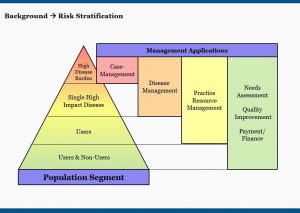
Using EHR’s Unstructured Data for Risk Stratification
Presented by: Hadi Kharrazi, MHI, MD, PhD Asst. Professor, JH School of Public Health; Asst. Professor, JH School of Medicine; Research Director, JHCPHIT This presentation focuses on the potential role…
-
Healthcare costs and utilization associated with high-risk prescription opioid use: a retrospective cohort study
Abstract Background Previous studies on high-risk opioid use have only focused on patients diagnosed with an opioid disorder. This study evaluates the impact of various high-risk prescription opioid use groups…